
Router Bits for MDF: Why Diamond Outlasts Carbide 30 to 1
MDF destroys carbide. Diamond PCD lasts around 30x longer - cost per metre compared, plus the budget X90/X99 route for lower volumes.
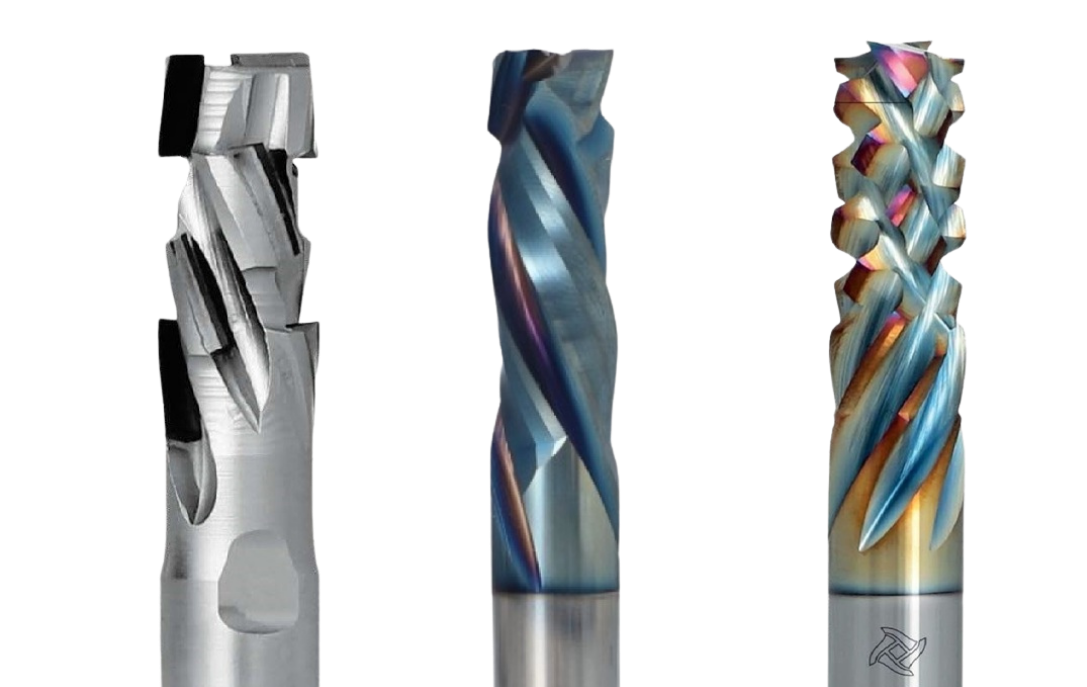
Key Takeaways
- MDF destroys standard carbide tooling fast — its resin-bonded dust is far more abrasive than natural timber chips, wearing cutting edges down in days rather than months.
- Diamond (PCD) tooling lasts roughly 30 times longer than carbide in MDF, making it dramatically cheaper per linear metre despite higher upfront cost.
- The DTF Z2+2 is purpose-built for MDF — fewer cutting edges mean more chip evacuation space, critical when routing a material that produces powder instead of shavings.
- For grooving and pocketing in MDF, diamond is the only viable option — carbide cannot maintain a clean edge in enclosed cuts.
- Coated compression bits (X90/X99) offer a budget entry point for shops running lower MDF volumes or mixed-material workflows.
MDF — The Material That Looks Easy but Kills Tools
Medium-density fibreboard sits in nearly every furniture workshop in the UK. Painted kitchen doors, shelving units, retail displays — MDF is everywhere because it machines uniformly, takes paint beautifully, and costs a fraction of solid timber. No grain direction, no knots, no seasonal movement. It looks like the easiest board material you could feed through a CNC router.
That impression lasts exactly as long as your first set of carbide bits does.
The problem is fundamental: MDF doesn't produce chips. It produces dust. Extremely fine, abrasive dust made up of wood fibres bonded with urea-formaldehyde or melamine resin. Those resin particles act like micro-sandpaper against cutting edges, grinding them down at a rate that shocks anyone who's only routed solid wood or laminated chipboard. A carbide spiral that holds a clean edge for weeks in chipboard might last a few days of continuous MDF nesting.
The secondary issue compounds the first: MDF dust doesn't evacuate the way proper chips do. It packs into flute channels, builds up around the cutting edge, and generates friction heat. That heat accelerates wear, the packed dust has nowhere to go, and the cycle feeds on itself until you're left with burning, rough edges, and a bit that's effectively blunt.
Why Standard Carbide Fails in MDF
As one senior applications engineer at ITA Tools puts it: "MDF is an incredibly hard material. A standard carbide bit practically never works well in it."
That statement surprises people who think of MDF as "soft" because you can dent it with a thumbnail. But hardness at the cutting edge is determined by the abrasive content of the material, not how it feels in your hand. The resin binders in MDF — which can constitute 10-15% of the board by weight — erode tungsten carbide at an alarming rate.
The degradation timeline tells the story. In chipboard or melamine-faced board, a quality carbide spiral holds a production-grade edge for 2,000 to 4,000 linear metres. In MDF, that same bit might manage 300 to 600 metres. You'll notice it first as slight fuzziness on the machined edge, then as increased cutting resistance (spindle load creeps up), then as outright burning. The technician confirms: "After a while in MDF when they're routing, it just doesn't cut cleanly anymore."
A shop nesting MDF components might cut 500 linear metres per shift. With carbide, that's a tool change every one to two days. With diamond, it's every few months.
DTF — Engineered Specifically for MDF
ITA Tools' DTF series exists because of the dust evacuation problem. Where most diamond router bits use a Z3+3 configuration (three cutting edges on the upcut section, three on the downcut), the DTF uses a Z2+2 design — one fewer edge on each section.
That might sound like a downgrade. It's the opposite. The technician explains: "One fewer cutting edge, but that gives it a hell of a lot more room for chip evacuation."
With a standard Z3+3 diamond bit like the DTM series, the flute channels are narrower because more of them are packed around the same diameter. In chipboard, where proper chips clear easily, those narrow channels work — more edges mean a smoother finish. But in MDF, where the "chips" are actually compacted powder, those narrow channels clog. The technician describes the result: "A standard DTM Z3+3 in MDF can start burning, rubbing the material too much, because there won't be enough space for chip evacuation."
The DTF 12mm (DTF.12.021.12.0DRN) is the workhorse of this range — the bit most shops reach for when MDF nesting is their primary operation. At 12-18 m/min, it cuts clean edges without the heat buildup that plagues tighter-fluted alternatives. The DTF.12.024.12.0DRN offers a larger cutting diameter for wider kerf requirements.
The DTF also works well in chipboard and melamine. It won't match the DTM's finish in those materials, but as the technician confirms, "quality will be good either way." At £20-25 less per piece than the DTM, it's the more economical choice for mixed-material shops running significant MDF volumes.
Complete MDF Tooling Guide
Choosing the right tool depends on the operation, your MDF volume, and your budget:
| Tool | Type | Best MDF Application | Feed Rate | Life vs Carbide | Price Range |
|---|---|---|---|---|---|
| DTF Z2+2 | Diamond PCD | Nesting, profiling, through-cuts | 12-18 m/min | ~30x longer | £180-£250 |
| DTE Z3+1 | Diamond PCD | Universal — nesting + mixed boards | 12-16 m/min | ~30x longer | £160-£220 |
| X99 Compression | Premium coated carbide | Premium compression for mixed work | 8-14 m/min | ~8-12x longer* | £70-£110 |
| X90 Compression | Coated carbide | Budget compression cutting | 10-15 m/min | ~5-8x longer* | £50-£80 |
| DT2 Diamond | Diamond PCD | Grooving, pocketing, channels | 8-12 m/min | ~30x longer | £140-£190 |
| Standard Carbide | Uncoated carbide | Not recommended for MDF | 6-10 m/min | Baseline (1x) | £25-£50 |
* Coated carbide lifespan versus standard uncoated carbide. Diamond PCD comparison is against standard carbide baseline.
The Compression Alternative — X99 and X90
Not every shop needs diamond tooling for MDF. If MDF makes up 20-30% of your throughput and you're cutting panels that will be painted anyway, coated compression bits offer a sensible middle ground.
The X99 and X90 compression bits both use what the technician describes as "different carbide" combined with a specialist coating designed for wood-based materials. They're positioned as a diamond alternative — less expensive, shorter-lived, but significantly more durable than uncoated carbide.
The X99 sits at the entry level. Its compression geometry keeps both faces of the MDF panel clean — useful for components visible on both sides. The X90 steps up in carbide grade and coating, delivering 8-12 times the life of standard carbide. For shops cutting 50-100 MDF sheets per month alongside chipboard and plywood, either represents a practical choice without the jump to PCD pricing. See our guide on what is a compression router bit (coming soon) for a deeper look at this geometry.
Feeds and Speeds for MDF
MDF rewards patience. Pushing feed rates higher because the material is uniform leads directly to the heat and dust problems that kill tooling prematurely. Slower feed rates give dust time to evacuate before it compacts in the flute channels.
For the DTF Z2+2 in MDF nesting, the recommended window is 12-18 m/min at 18,000-24,000 RPM. Most operators find the sweet spot around 14-15 m/min. Key parameters:
- Spindle speed: 18,000-24,000 RPM for 12mm shank tooling. Don't exceed 24,000 unless your extraction handles the thermal load.
- Feed rate: 12-18 m/min for diamond (DTF/DTE), 8-14 m/min for coated carbide (X90/X99), 6-10 m/min for standard carbide.
- Depth per pass: Full-depth single-pass for 18-19mm MDF. For 22-25mm boards, consider two passes to reduce dust loading.
- Chip load: Target 0.15–0.25 mm per tooth for diamond, 0.10–0.20 mm for carbide (based on effective flute count).
- Climb milling: Standard for CNC nesting — pushes dust away from the cutting edge.
For comprehensive feed and speed calculation across all materials, see our practical feeds and speeds guide.
Grooving and Pocketing in MDF — Diamond Only
If nesting is where carbide struggles in MDF, grooving and pocketing is where it fails outright. Through-cuts allow dust to escape downward through the spoilboard. Grooves and pockets trap it. The tool runs back and forth in a closed channel, re-cutting its own dust, building heat with nowhere to dissipate it.
The technician's assessment is unambiguous: "Diamond, only diamond" for grooving and pocketing in MDF. Carbide bits tasked with routing cable channels, hinge recesses, or decorative grooves will lose their edge within hours of continuous operation. The enclosed nature of these cuts concentrates every disadvantage MDF presents into the worst possible combination.
The DT2 series is designed for these operations. Available in smaller diameters through the DT2 range, these bits use PCD cutting edges optimised for plunge-and-route and slotting. Run them at 8-12 m/min with aggressive extraction for consistent quality across thousands of metres.
Dust Extraction — The Non-Negotiable
Every recommendation above assumes proper dust extraction. Without it, even diamond tooling underperforms because the fundamental problem — fine dust with nowhere to go — persists regardless of cutting edge material.
MDF dust is also a health hazard. The HSE classifies hardwood dust (including MDF) as a substance hazardous to health under COSHH regulations, with a workplace exposure limit of 3 mg/m3. MDF dust is finer than most natural hardwood dust, disperses more readily, and the formaldehyde content in the binder adds chemical exposure risk.
Practical requirements: minimum 20 m/s airflow at the extraction hood, fine filtration (1-2 micron), brush skirts in good condition on the router head, quarterly ductwork inspection for buildup, and ideally a ceiling-mounted ambient filter as secondary protection.
Cost Analysis — The 30:1 Equation
The business case comes down to cost per linear metre. Consider a shop cutting 500 linear metres per shift, five days per week — roughly 10,000 metres per month:
| Factor | Standard Carbide | DTF Diamond |
|---|---|---|
| Tool cost | ~£35 | ~£210 |
| Usable life in MDF | ~500 metres | ~15,000 metres |
| Cost per linear metre | £0.070 | £0.014 |
| Tools needed per month (10,000m) | 20 bits | 0.67 bits |
| Monthly tooling cost | £700 | £140 |
| Annual tooling cost | £8,400 | £1,680 |
| Annual saving with diamond | £6,720 per year | |
That's a five-to-one cost advantage — and this doesn't account for downtime (20 tool changes per month vs less than one, at 10-15 minutes each), scrap reduction (carbide produces borderline parts near end of life), or energy savings (dull bits draw more spindle current). The break-even comes after roughly 1,000 metres — two shifts of nesting. For a broader comparison across all materials, read our analysis of diamond vs carbide router bits (coming soon).
Frequently Asked Questions
Can I use a DTM (Z3+3) for MDF instead of a DTF?
You can, but it's not ideal. The DTM's additional cutting edges reduce chip evacuation space. In MDF, this leads to dust packing, heat buildup, and potential burning. If you already own a DTM, reduce your feed rate by 20-30% and maximise extraction — but for dedicated MDF work, the DTF is the correct tool.
What thickness of MDF can I cut in a single pass?
Standard 18-19mm MDF panels nest cleanly in a single full-depth pass with the DTF. For 22-25mm boards, a two-pass strategy reduces dust loading and heat, particularly on longer cuts.
Do I need different tooling for moisture-resistant MDF?
MR MDF uses slightly more abrasive resin binders, but the difference isn't significant enough to require different tooling. Use the same DTF recommendation — expect perhaps 5-10% shorter tool life compared to standard MDF.
How do I know when a diamond bit needs replacing?
Diamond tools maintain edge quality for most of their life, then decline quickly. Watch for a sudden change rather than gradual degradation: edge quality drops noticeably between shifts, or spindle load increases by more than 15%. Many shops track linear metres per tool and swap at 80% of expected life during planned maintenance.
Is diamond tooling worth it if I only cut MDF occasionally?
If MDF is less than 10-15% of your volume, coated compression bits like the X90 or X99 are more practical. They outlast standard carbide by 5-12x in MDF at a fraction of diamond pricing.
Can diamond router bits be resharpened?
Yes. PCD edges can be resharpened by specialist services, recovering 80-90% of original performance. Most bits take 2-4 resharpenings before the PCD tip is consumed, effectively doubling or tripling the already-extended service life. Our CNC nesting router bits guide covers resharpening economics in detail.
Find the Right Router Bit for Your MDF Work
Browse the full ITA Tools diamond and compression ranges, with technical specs, stock availability, and UK pricing for every diameter and cutting length.
DTF Series for MDF DTE Universal


